
AI EU Act: Complete Guide for Business Compliance 2026
The European Union's approach to artificial intelligence regulation represents the world's first comprehensive legislative framework for AI governance. As organisations across Europe accelerate their digital transformation initiatives, understanding the ai eu act becomes essential for compliance, risk management, and strategic planning. This regulation establishes clear boundaries for AI development and deployment, creating a harmonised legal framework that balances innovation with fundamental rights protection. Whether you're deploying chatbots, implementing recruitment systems, or using AI for decision-making processes, the ai eu act will fundamentally shape how your organisation approaches artificial intelligence.
Understanding the AI EU Act Framework
The ai eu act introduces a risk-based regulatory approach that categorises AI systems according to their potential impact on safety and fundamental rights. This tiered structure determines the level of regulatory oversight required for different applications.
The Four Risk Categories
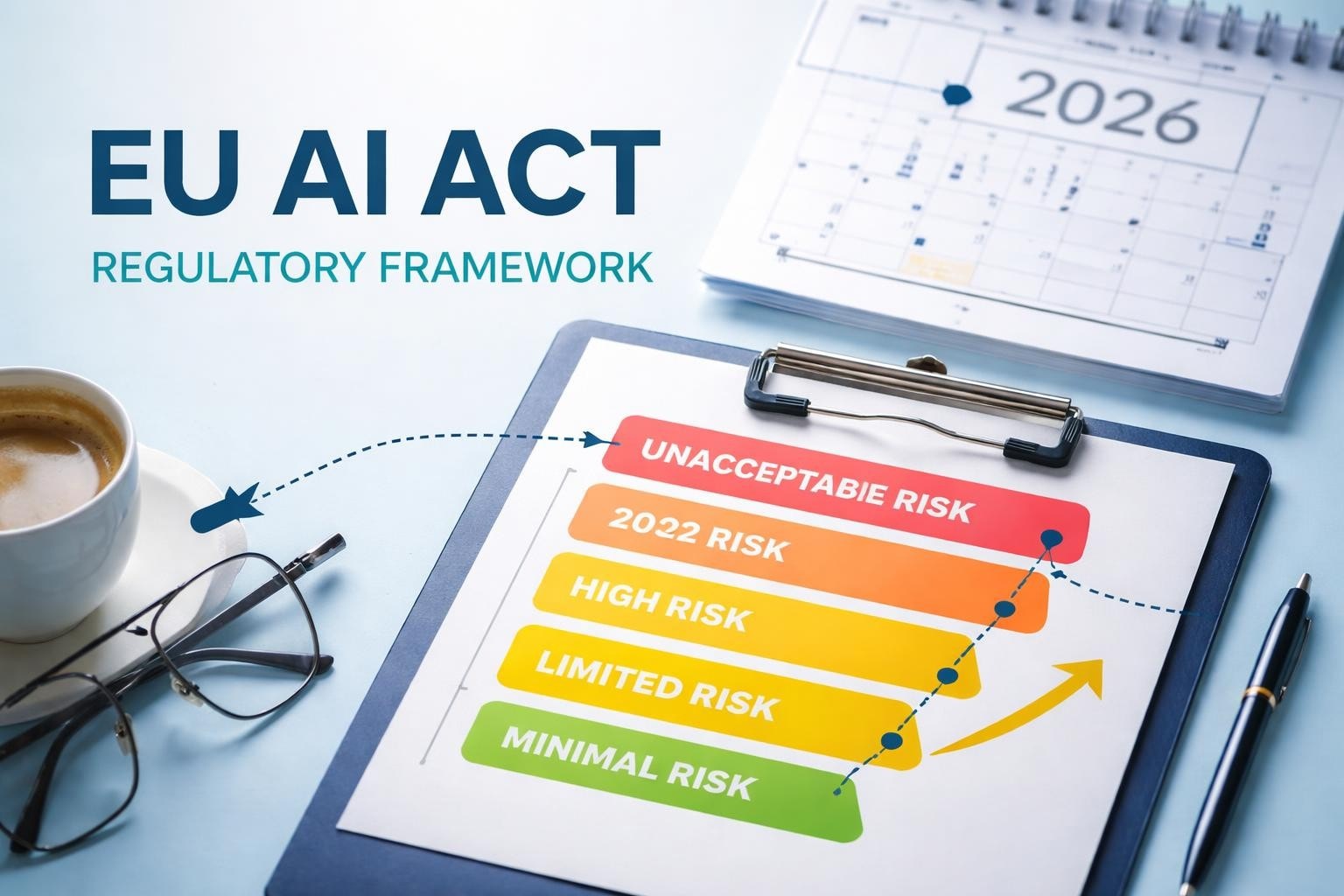
The European Commission has established four distinct risk levels, each with specific compliance obligations:
Risk Level | Examples | Requirements |
Unacceptable | Social scoring, real-time biometric identification in public spaces | Prohibited entirely |
High-risk | AI in recruitment, credit scoring, law enforcement | Strict compliance obligations including conformity assessments |
Limited risk | Chatbots, deepfakes | Transparency requirements only |
Minimal risk | AI-enabled video games, spam filters | No specific obligations |
What Makes an AI System High-Risk
High-risk AI systems fall into specific categories defined by the regulation. These include systems used in critical infrastructure, educational or vocational training, employment and worker management, access to essential services, law enforcement, migration and border control, and administration of justice.
The determining factors for high-risk classification include:
Potential to cause harm to health, safety, or fundamental rights
Use in decision-making processes affecting individuals
Deployment in sensitive sectors with significant societal impact
Application in areas where errors could have serious consequences
Understanding where your AI systems fall within this framework is the first step towards compliance. The European Data Protection Supervisor provides detailed guidance on how to assess your systems against these criteria.
Key Compliance Requirements Under the AI EU Act
Organisations deploying high-risk AI systems face substantial compliance obligations. These requirements span the entire AI lifecycle, from initial design through deployment and ongoing monitoring.
Documentation and Transparency Obligations
High-risk AI providers must maintain comprehensive technical documentation that demonstrates compliance throughout the system's lifecycle. This includes detailed descriptions of the AI system's intended purpose, design specifications, and development processes.
Essential documentation components:
Risk management system documentation
Data governance and training datasets
Technical specifications and system architecture
Human oversight measures
Accuracy, robustness, and cybersecurity assessments
Post-market monitoring procedures
The ai eu act mandates that users of high-risk AI systems receive clear instructions for use, enabling them to understand the system's capabilities, limitations, and appropriate deployment contexts. This transparency requirement extends to end-users who must be informed when they're interacting with AI systems.
Data Governance Standards
Training data quality directly impacts AI system performance and compliance. The regulation establishes specific requirements for data used to train high-risk AI systems.
Organisations must ensure their training datasets are:
Relevant, representative, and free from errors
Appropriately examined for possible biases
Complete in relation to the intended purpose
Subject to appropriate data governance and management practices
These standards address concerns about algorithmic bias and discrimination that have emerged as AI systems become more prevalent in decision-making processes. Proper data governance isn't merely a compliance checkbox but a fundamental requirement for developing fair and effective AI systems.
Implementation Timeline and Enforcement
The ai eu act follows a phased implementation approach, giving organisations time to adapt their systems and processes. The regulation officially entered into force in August 2024, but different provisions apply at different stages.
Critical Dates for Compliance
Date | Milestone | What It Means |
August 2024 | Act enters into force | Countdown begins |
February 2025 | Prohibited practices ban | Six months after entry |
August 2026 | General-purpose AI rules | Including transparency requirements |
August 2027 | Full application | All obligations apply, including high-risk systems |
This staged timeline allows organisations to prioritise their compliance efforts. Prohibited AI practices became illegal first, whilst high-risk AI systems have until August 2027 for full compliance.
Enforcement Mechanisms and Penalties
National supervisory authorities will enforce the ai eu act within their jurisdictions, working alongside the European AI Office for coordination. The regulation establishes substantial penalties for non-compliance, designed to ensure organisations take their obligations seriously.
Penalty structure:
Up to €35 million or 7% of global annual turnover (whichever is higher) for prohibited AI practices
Up to €15 million or 3% of turnover for other violations
Up to €7.5 million or 1.5% of turnover for supplying incorrect information
These figures represent maximum penalties, with actual fines determined based on factors including the severity of the infringement, the organisation's size, and whether violations were intentional or negligent.
Preparing Your Organisation for AI EU Act Compliance
Successful compliance requires systematic preparation across multiple organisational functions. Legal, technical, and operational teams must collaborate to ensure AI systems meet regulatory requirements whilst delivering business value.
Conducting an AI Inventory Assessment
Start by cataloguing all AI systems currently in use or under development within your organisation. This inventory should capture each system's purpose, functionality, data sources, and potential risk classification under the ai eu act.
Key inventory elements:
System name and description
Business unit responsible
Vendor information (if applicable)
Intended purpose and use cases
Risk classification assessment
Current compliance status
Required remediation actions
This exercise often reveals "shadow AI" – systems deployed without central oversight. Bringing these into the light is essential for comprehensive compliance.
Building Internal AI Governance
Effective governance structures transform compliance from a burden into a strategic advantage. Establishing clear roles, responsibilities, and processes ensures consistent application of ai eu act requirements across your organisation.
Consider forming a cross-functional AI governance committee with representatives from legal, compliance, IT, data protection, and relevant business units. This committee should oversee AI system approval, risk assessment, and ongoing monitoring.
For organisations subject to the ai eu act's requirements, AI literacy training becomes essential. Article 4 specifically mandates that providers of high-risk AI systems ensure their staff and other persons dealing with the operation and use of AI systems possess sufficient AI literacy. Implementing structured AI literacy programmes helps ensure your team understands both the technical capabilities and regulatory obligations associated with AI systems.
Article 4 and AI Literacy Requirements
The ai eu act's Article 4 introduces a specific obligation that many organisations overlook: AI literacy. This provision requires providers and deployers of AI systems to ensure that their personnel have an appropriate level of AI understanding.
What Article 4 Requires
AI literacy under the regulation means skills and knowledge enabling informed deployment and use of AI systems. This includes understanding AI capabilities and limitations, knowing how to interpret AI outputs appropriately, and recognising when human intervention is necessary.
The requirement applies to:
Staff developing AI systems
Personnel deploying or operating AI systems
Individuals making decisions based on AI outputs
Those monitoring AI system performance
The AI Literacy Course for EU AI Act Compliance addresses these requirements directly, offering interactive training in over 30 languages that covers essential AI concepts, risk awareness, and compliance fundamentals. This self-paced format enables organisations to scale training across their workforce efficiently.
Implementing Effective AI Literacy Programmes
Successful AI literacy initiatives move beyond one-time training events to create ongoing learning cultures. Your programme should address different audience needs – technical teams require deeper knowledge than general staff, whilst executives need strategic understanding.
Programme components to consider:
Role-specific learning paths
Practical examples relevant to your industry
Regular updates as AI capabilities evolve
Assessment and certification options
Multilingual support for international teams
Documentation of your AI literacy efforts becomes part of your compliance evidence, demonstrating due diligence in meeting Article 4 obligations.
Sector-Specific Implications
The ai eu act affects different industries in distinct ways. Understanding your sector's specific obligations helps focus compliance efforts where they matter most.
Financial Services and Credit Decisions
AI systems used for credit scoring, loan applications, or insurance underwriting typically qualify as high-risk under the regulation. Financial institutions must implement rigorous testing for bias, maintain detailed audit trails, and ensure human oversight of AI-driven decisions.
These organisations face dual regulatory pressure, as the ai eu act complements existing financial services regulations rather than replacing them. Coordination between compliance teams becomes essential to avoid gaps or contradictions.
Human Resources and Employment
Recruitment AI, employee monitoring systems, and performance evaluation tools fall squarely into the high-risk category. The regulation recognises that these systems can significantly impact individuals' livelihoods and career prospects.
HR departments must ensure their AI tools:
Don't discriminate based on protected characteristics
Provide transparent explanations for decisions
Allow human review and intervention
Maintain appropriate records for audit purposes
The stakes are particularly high here, as prohibited practices under the ai eu act include certain forms of workplace surveillance and manipulation.
Healthcare and Medical Devices
AI systems intended for diagnosis, treatment decisions, or patient risk stratification face stringent requirements. These tools must demonstrate clinical validity, maintain patient safety, and respect data protection rights.
Healthcare AI often intersects with medical device regulations, creating complex compliance landscapes. Organisations in this sector benefit from early engagement with notified bodies and regulatory authorities to clarify requirements.
General-Purpose AI Models
The ai eu act extends beyond specific applications to address foundation models and general-purpose AI systems. This forward-looking approach recognises that powerful AI models can enable both beneficial and harmful applications.
Obligations for Foundation Model Providers
Providers of general-purpose AI models with systemic risk face specific requirements including:
Conducting model evaluations and adversarial testing
Assessing and mitigating systemic risks
Maintaining appropriate cybersecurity protections
Reporting serious incidents to authorities
Ensuring adequate computational resources for compliance
The "systemic risk" threshold considers factors like model capability, impact, and the number of users. Models like those powering ChatGPT fall into this category, attracting heightened scrutiny.
Transparency Requirements
All general-purpose AI models must provide sufficient information to downstream providers to enable their compliance. This includes technical documentation about capabilities, limitations, and appropriate use cases.
Systems generating synthetic content must clearly identify AI-generated materials, helping combat misinformation and deceptive practices. This transparency obligation extends to deepfakes and other manipulated media.
International Implications and Global Alignment
Whilst the ai eu act applies within European Union member states, its influence extends globally. Organisations operating internationally must navigate varying regulatory landscapes whilst avoiding fragmentation of their AI governance approaches.
Extraterritorial Application
The regulation applies to:
Providers placing AI systems on the EU market
Deployers of AI systems located within the EU
Providers and deployers outside the EU where output is used in the EU
This broad jurisdictional scope means organisations worldwide must consider ai eu act compliance if they serve European markets or customers. The approach mirrors GDPR's extraterritorial reach, creating a "Brussels effect" where EU standards influence global practice.
Alignment with Other Frameworks
Several jurisdictions are developing their own AI regulations, creating opportunities for harmonisation but also risks of conflicting requirements. The ai eu act serves as a reference point for these emerging frameworks.
Key international developments:
United States sectoral AI regulations
United Kingdom's proportionate approach
China's algorithm governance rules
OECD AI principles and guidelines
Organisations benefit from identifying common compliance elements across frameworks, building unified governance structures that satisfy multiple jurisdictions efficiently.
Practical Compliance Strategies
Moving from understanding the ai eu act to implementing compliance requires practical strategies and systematic execution. Successful organisations treat compliance as an ongoing process rather than a one-time project.
Vendor Management and Third-Party AI
Many organisations deploy AI systems developed by external vendors. The ai eu act creates shared responsibilities between providers and deployers, making vendor management crucial for compliance.
When procuring AI systems, request:
Documentation of the system's risk classification
Evidence of conformity assessments for high-risk systems
Clear instructions for use and deployment
Contractual commitments regarding regulatory compliance
Procedures for reporting incidents or malfunctions
Due diligence questions for vendors:
How does your system comply with ai eu act requirements?
What documentation can you provide about conformity assessments?
What support do you offer for our compliance obligations as deployers?
How will you notify us of regulatory changes affecting the system?
What happens if the system fails to meet regulatory standards?
These conversations establish clear expectations and allocate compliance responsibilities appropriately.
Developing Internal Standards and Procedures
Translate regulatory requirements into operational procedures your teams can follow consistently. Standard operating procedures for AI development, deployment, and monitoring ensure compliance becomes embedded in daily work rather than an afterthought.
Essential procedures include:
AI system approval workflows
Risk assessment methodologies
Data governance protocols
Human oversight mechanisms
Incident reporting and response
Post-market monitoring processes
Documentation of these procedures serves dual purposes: guiding staff behaviour and demonstrating compliance to regulators during inspections or investigations.
Common Compliance Challenges and Solutions
Organisations implementing ai eu act compliance encounter predictable obstacles. Anticipating these challenges enables proactive mitigation strategies.
Resource Constraints
Smaller organisations particularly struggle with the expertise and budget required for comprehensive compliance programmes. The regulation's requirements don't scale down for company size, creating disproportionate burdens.
Practical solutions:
Prioritise high-risk systems for initial compliance efforts
Leverage industry associations and shared resources
Consider compliance-as-a-service offerings
Invest in training to build internal capabilities over time
Explore regulatory sandboxes for innovative approaches
The phased implementation timeline provides breathing room, but organisations should start preparation well before final deadlines.
Legacy System Remediation
Existing AI systems deployed before the ai eu act's application dates may not meet current standards. Organisations face difficult decisions about remediation, replacement, or retirement of these systems.
Assessment criteria for legacy systems:
Factor | Retire | Remediate | Replace |
Compliance gap | Large | Moderate | Large |
Business criticality | Low | High | Moderate |
Remediation cost | N/A | Low-moderate | High |
Strategic importance | Low | High | Moderate-high |
This decision framework helps allocate resources effectively, focusing remediation efforts where they deliver the greatest compliance and business value.
Balancing Innovation and Compliance
The ai eu act aims to foster trustworthy AI without stifling innovation, but organisations sometimes perceive tension between compliance and competitive advantage. Successful approaches integrate compliance into innovation processes from the outset.
Innovation-friendly compliance practices:
Involve compliance teams early in AI development projects
Treat privacy and safety as design requirements, not constraints
Use regulatory sandboxes to test novel approaches
Build compliance capabilities as competitive differentiators
Maintain dialogue with regulators about emerging use cases
Forward-thinking organisations recognise that robust governance actually accelerates innovation by building stakeholder trust and reducing risk of costly failures.
The Role of AI Literacy in Organisational Readiness
Beyond specific technical compliance measures, the ai eu act emphasises the importance of human understanding and oversight. AI literacy emerges as a critical capability that underpins effective compliance and responsible AI deployment.
Why AI Literacy Matters for Compliance
Technical controls alone cannot ensure ai eu act compliance. Your organisation needs personnel who understand AI systems sufficiently to deploy them appropriately, recognise potential problems, and exercise meaningful oversight.
AI literate teams can:
Identify when systems require risk assessments
Spot potential biases or failures in AI outputs
Understand when human intervention is necessary
Communicate effectively with technical and non-technical stakeholders
Make informed decisions about AI procurement and deployment
This human element transforms compliance from a checkbox exercise into genuine risk management and value creation.
Measuring AI Literacy Effectiveness
Organisations investing in AI literacy programmes should track their impact through both qualitative and quantitative metrics. Effective measurement demonstrates compliance with Article 4 whilst identifying opportunities for programme improvement.
Useful metrics include:
Training completion rates across different roles
Assessment scores and knowledge retention
Incident reports related to AI misuse or misunderstanding
Employee confidence in working with AI systems
Time-to-competency for new AI system deployments
Regular measurement creates accountability and ensures AI literacy initiatives deliver tangible compliance and business benefits.
The ai eu act represents a fundamental shift in how organisations must approach artificial intelligence, establishing clear expectations for responsible development and deployment whilst leaving room for innovation. By understanding the regulation's risk-based framework, implementing robust governance structures, and investing in AI literacy across your organisation, you can transform compliance from a regulatory burden into a strategic advantage. GURO (myaitraining.eu) provides AI Literacy courses fully aligned with Article 4 of the EU AI Act, offering short, interactive training in over 30 languages that equips your team with essential AI understanding in a practical, self-paced format. Start building your organisation's AI literacy foundation today and ensure your team is prepared for the ai eu act's requirements.


Comments